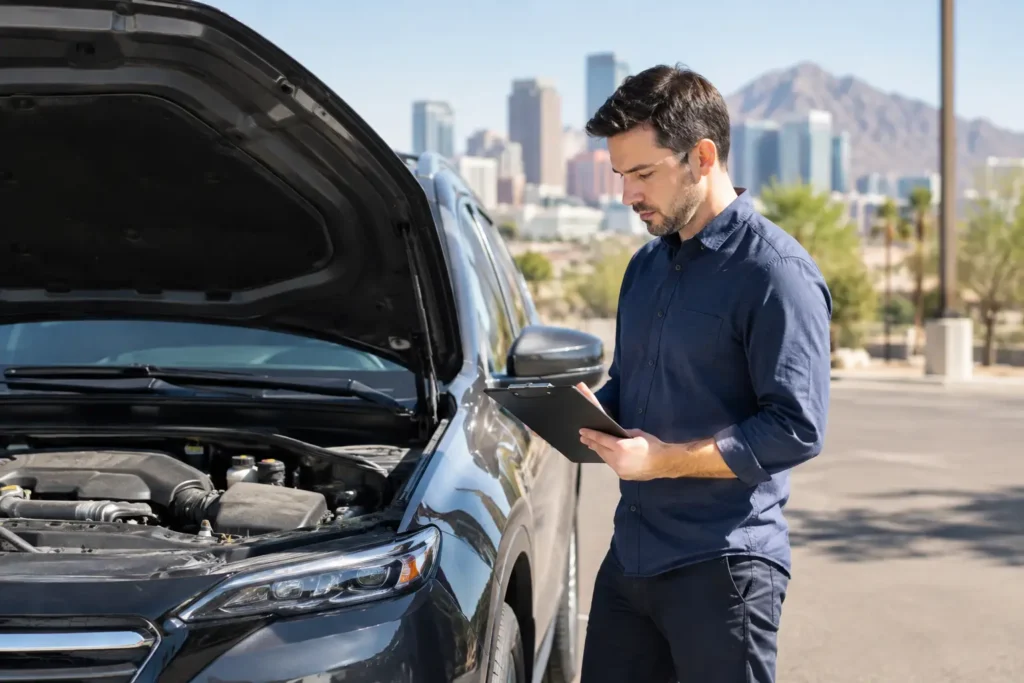

A rental can get you on the road quickly, but only if you arrive with the right paperwork. If you are asking, what documents do renters need, the short answer is a valid driver’s license, a way to pay, proof of insurance or an insurance selection, and any details required for additional drivers or your intended use.
For Phoenix renters, preparation matters even more when the vehicle will be used for Uber, Lyft, Veyo, delivery work, airport travel, or a family trip. Requirements can vary by vehicle type, rental term, age, payment method, and insurance option, so confirming the details before pickup helps avoid delays.
What Documents Do Renters Need for a Car Rental?
Most car rental reservations start with four core items. Bring original, current documents rather than photos, expired cards, or incomplete screenshots. A rental provider may need to verify information in person before releasing the vehicle.
- A valid driver’s license: The license must be current and issued to the person who will drive. The name should match the reservation and payment information.
- Government-issued photo identification: A state ID, passport, or other accepted photo ID may be requested to verify your identity, particularly when information needs clarification.
- A payment card: Most rentals require a debit or credit card in the renter’s name. The card may be used for the rental charge, deposit, or authorization hold.
- Insurance information: Bring your personal auto insurance card if you plan to use your own coverage. If you need rental insurance, ask about available options before pickup.
That is the basic starting point, but it is not always the complete list. A renter using a vehicle for work, adding another driver, or paying with a specific card type may need a few more details.
Your Driver’s License and Identity Documents
Your driver’s license does more than prove you can drive. It confirms the legal name, license status, and address associated with the reservation. Make sure it is not expired, suspended, cracked beyond readability, or issued under a different name than the name on your booking.
If your name recently changed because of marriage, divorce, or another legal reason, bring supporting documentation if your license and payment card do not match. Calling ahead is the simplest way to find out what will be accepted.
Visitors from outside Arizona can generally rent with a valid out-of-state license. International renters may need a passport and, depending on the license and rental requirements, an International Driving Permit. Do not assume an overseas license will be handled the same way as a U.S. license. Ask before making the trip to pick up the vehicle.
Payment, Deposits, and Proof of Address
A payment method is not just for covering the weekly rental rate. Rental companies may also place a temporary authorization hold or require a security deposit. The amount can depend on the vehicle, rental length, insurance selection, driving history requirements, and whether the car will be used for rideshare or delivery work.
Bring the physical payment card when possible, and make sure it has enough available funds for both the rental charge and any required hold. A card in someone else’s name can create problems, even if that person is with you. Some providers accept debit cards, while others have extra conditions for debit transactions. Check the policy in advance instead of relying on a last-minute transfer or mobile wallet.
You may also be asked to verify your current address. A utility bill, bank statement, lease document, or other recent official mail can help when an address confirmation is needed. The exact document accepted depends on the provider, so keep personal documents secure and share only what is requested.
Insurance Documents: What to Bring and What to Ask
Insurance is one of the most common causes of rental confusion. Your personal auto policy may provide some coverage for rental vehicles, but coverage limits, deductibles, exclusions, and business-use rules matter. A policy that protects you on a weekend personal trip may not cover driving for Uber, Lyft, Veyo, DoorDash, Instacart, or Amazon Flex.
Bring your current insurance card and policy information if you plan to rely on your own coverage. Before pickup, contact your insurer and ask whether your policy covers the specific rental vehicle, the full rental period, and your intended use. Ask about liability, collision, comprehensive coverage, roadside help, and loss-of-use charges.
If you do not have personal coverage or prefer a different level of protection, ask about rental insurance options. The right choice depends on your budget, how you will use the vehicle, and the protection already available through a platform or personal policy. Getting clear answers upfront is usually more affordable than discovering a gap after an accident.
Extra Documents for Rideshare and Delivery Drivers
Gig drivers need a road-ready vehicle, but they also need to make sure their rental arrangement works with the platform they use. If you plan to earn with a rental car, have your active platform account details available and be ready to provide any information needed for the vehicle approval process.
For rideshare, that may include your driver profile, proof of eligibility, and documents required by Uber or Lyft after the rental is issued. For medical transportation platforms such as Veyo, requirements can be more specific because passenger safety, inspections, and insurance standards may apply. Delivery platforms may have fewer vehicle-document requirements, but you should still confirm that rental use is permitted.
Do not use a standard personal-use rental for gig work unless the rental provider has confirmed it is allowed. This is where working with a local transportation partner that understands rideshare and delivery needs can save time. Elite Movement Transportation Services helps Phoenix-area drivers explore flexible rental options designed around getting to work quickly.
Additional Drivers Need Their Own Verification
If more than one person will drive the rental, tell the rental provider before pickup. An additional driver typically needs to be present with a valid driver’s license and may need to meet the same age, screening, and insurance requirements as the primary renter.
Adding a driver after the vehicle leaves can be difficult, and an unapproved driver may not be covered under the rental agreement or insurance plan. This matters on long trips, family travel, shared work schedules, and group events where drivers expect to switch places.
Documents for Bus Rentals and Chauffeured Transportation
The paperwork changes when you are arranging transportation for a group instead of driving yourself. For a chauffeured bus, black car, airport transfer, wedding shuttle, school outing, church trip, or corporate event, you usually do not need to present a driver’s license because a professional driver is provided.
Instead, the organizer should have a clear itinerary, pickup and drop-off addresses, date and time, passenger count, contact information, and payment details. Schools, churches, companies, and organizations may also need a purchase order, signed service agreement, event coordinator contact, or billing information.
For self-drive passenger vehicles, the person operating the vehicle will need the appropriate license and may need to meet additional eligibility requirements based on seating capacity. Do not assume a standard driver’s license is enough for every vehicle. Confirm the vehicle class and driver qualifications before reserving.
A Simple Checklist Before You Leave Home
A five-minute check can prevent a wasted trip. Put your valid license, photo ID, payment card, insurance card, and reservation details in one place. If someone else will drive, make sure they bring their own license and are added before departure.
Gig workers should also check their platform requirements and confirm the rental is approved for their work. Group organizers should review the itinerary, final passenger count, and on-site contact number. If you have questions about a deposit, insurance, debit-card use, age requirement, or out-of-state license, ask before your scheduled pickup time.
The right documents make the rental process faster, but the bigger goal is simple: leave with transportation that fits your plans and clear expectations about how to use it. A quick confirmation before you book can help you spend less time at the counter and more time on the road.