A failed inspection can cost more than a few minutes at the shop. If you depend on Uber, Lyft, Veyo, or delivery work for weekly income, a rejected vehicle can mean missed trips and delayed earnings. The good news is that most drivers can pass rideshare inspections by handling a short list of visible maintenance and paperwork issues before the appointment.
Phoenix driving puts extra pressure on vehicles. Extreme heat, long freeway miles, dusty conditions, and frequent stop-and-go trips can expose problems that might not be obvious during a quick walk-around. A little preparation helps you arrive with a clean, safe, platform-ready vehicle instead of scrambling to fix something after the fact.
What Rideshare Inspectors Usually Check
Rideshare inspections focus on whether a vehicle appears safe, functional, and suitable for carrying passengers. Requirements vary by platform, vehicle type, and local rules, so always use the current inspection form for the app you plan to drive with. Uber and Lyft may use similar forms, but do not assume one approval automatically covers every platform.
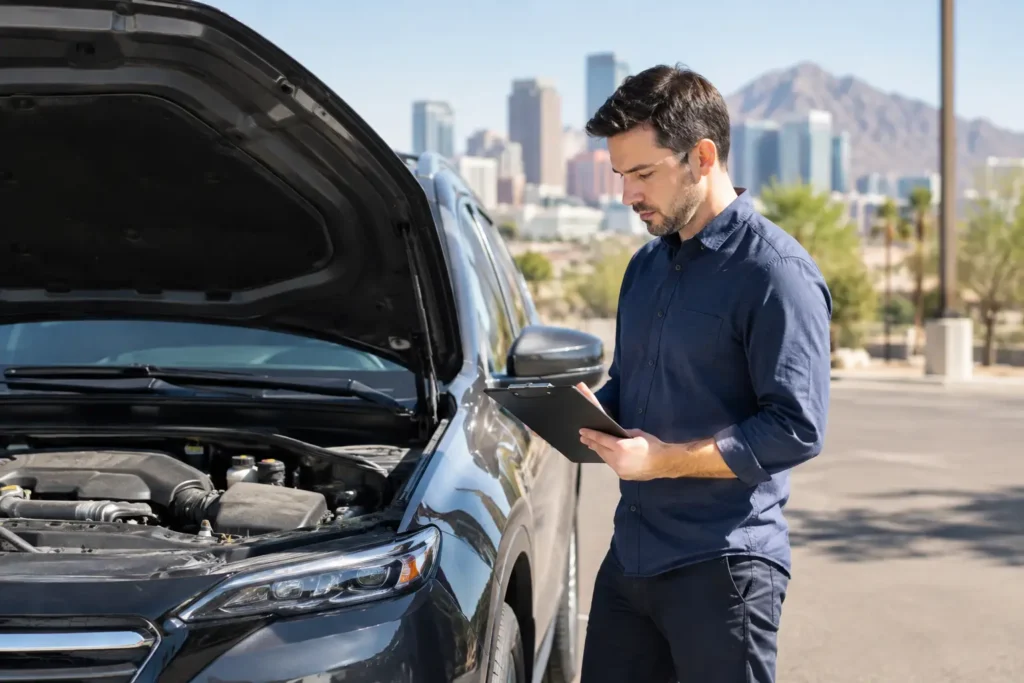
Inspectors generally look at basic safety equipment, exterior condition, interior condition, and required documents. They are not performing a full mechanical diagnosis, but they will flag obvious defects. A dashboard warning light, a bald tire, a cracked windshield in the driver’s view, or a broken seat belt can stop the process quickly.
For drivers renting a vehicle, ask whether the vehicle is already rideshare eligible and whether an inspection document is available or needs to be renewed. A rental that is clean and well-maintained still needs to meet the platform’s age, registration, insurance, and inspection requirements.
Your Pre-Inspection Walk-Around
Do your own check the day before, not five minutes before your inspection. Park in a well-lit area, turn the car on, and test every item as a passenger would experience it.
Start with the exterior. Look for damage that could be considered unsafe, including loose bumpers, damaged mirrors, severely cracked lights, or tires with visibly low tread. Tires should be properly inflated and free of sidewall bulges, nails, or uneven wear. In Phoenix, heat can accelerate tire wear and lower pressure readings, so check them when the tires are cool if possible.
Then test the lighting. Turn on the headlights, high beams, brake lights, turn signals, reverse lights, and hazard lights. If you are alone, use a reflection, phone camera, or ask someone to stand behind the vehicle while you press the brake pedal. Replacing a bulb is usually inexpensive. Finding out that it is out at the inspection site is an unnecessary delay.
Inside the vehicle, make sure all seat belts latch and retract correctly. Test the horn, windshield wipers, heater and air conditioning, door locks, and windows. Strong air conditioning is especially important for passenger comfort in the Valley, even when it is not the item that determines your inspection result. Remove trash, personal items, strong odors, and anything that takes up passenger seating or cargo space.
Before leaving for the appointment, confirm these common inspection items:
- Headlights, brake lights, turn signals, hazards, and wipers work properly.
- Tires have safe tread, correct inflation, and no visible damage.
- Seat belts, doors, windows, mirrors, horn, and locks operate as intended.
- The windshield and mirrors provide a clear view without major cracks or obstructions.
- The cabin is clean, odor-free, and ready for passengers.
Clear Dashboard Lights Before You Go
A warning light can be one of the fastest ways to fail or delay a rideshare inspection. The check engine light is the most common concern, but ABS, airbag, brake, tire pressure, and other warning indicators matter too.
Do not simply clear a warning code and hope it stays off. If the light returns on the way to the inspection, you are back where you started. Have the underlying problem diagnosed and repaired. Sometimes the fix is straightforward, such as a loose fuel cap or low tire pressure. Other times it may involve a sensor, emissions issue, brake component, or airbag system that requires professional service.
This is also where timing matters. After certain repairs or a battery replacement, a vehicle’s emissions readiness monitors may need time and normal driving cycles to reset. If your platform or inspection location checks for readiness, schedule the repair early enough that you are not trying to solve it on inspection day.
Bring the Right Documents
An inspection is not only about the car. You may need to present a current driver’s license, vehicle registration, proof of insurance, and the inspection form required by the platform. Keep originals or clear current copies available as directed by the app.
Check names, expiration dates, VIN details, and license plate information. A document mismatch can create the same frustration as a mechanical failure. This is particularly relevant with rental vehicles, where the registered owner and insurance documents may not match the driver’s personal paperwork. Confirm with the rental provider what documents you should carry and what the platform accepts.
If you drive for multiple apps, keep track of each platform’s deadlines separately. An inspection that expires in one app can interrupt earnings even if another app still shows your account as active.
Fix Small Problems Before They Become Expensive
Most inspection failures come from issues drivers have already noticed: squealing brakes, worn tires, a wiper that streaks across the windshield, a mirror that shakes loose, or a warning light that has been ignored for weeks. Gig driving adds miles quickly, so routine maintenance is part of protecting your ability to earn.
Brakes deserve special attention. If you hear grinding, feel vibration, notice pulling when stopping, or need more distance to slow down, schedule service before seeking an inspection. The same applies to steering issues, suspension noise, fluid leaks, and overheating. A vehicle can look clean and still be unsafe to operate.
There is a trade-off when money is tight. Delaying maintenance may seem cheaper than taking a day off the road, but a failed inspection or roadside breakdown can cost more in missed work, towing, and rushed repairs. Plan a small weekly amount for tire care, oil changes, wiper replacements, brake service, and unexpected repairs.
Renting for Rideshare? Confirm Eligibility First
A weekly rental can be a practical option when your own vehicle is unavailable, needs major repair, or does not qualify for the platform you want to use. But never assume every rental vehicle can be used for rideshare or delivery. Vehicle age, insurance structure, registration, platform policies, and local availability all affect eligibility.
Before reserving, ask direct questions: Is the vehicle approved or suitable for the platform I plan to use? Is insurance guidance available? Is there an active inspection form, and who handles renewal if it expires during my rental? Are mileage terms compatible with the number of hours and trips I plan to drive?
Elite Movement Transportation Services helps Phoenix-area drivers look for flexible, dependable rental options when they need a vehicle without a long-term ownership commitment. The best rental choice depends on your platform, weekly driving volume, passenger needs, and budget, so confirm the details before you commit.
What to Do If You Fail
A failed inspection is usually a repair list, not the end of your ability to drive. Read the form carefully, correct each item, and ask whether a reinspection is required or whether you can submit updated documentation. Take clear photos of repairs and save receipts when appropriate.
Avoid guessing about a failure. If an inspector marks a tire, windshield, warning light, or seat belt concern, address that exact item first. If the explanation is unclear, contact the inspection location or platform support for clarification before paying for unrelated work.
Set a reminder well ahead of your next inspection deadline. Giving yourself two or three weeks creates room for repairs, parts delays, and a recheck without interrupting your work.
A rideshare inspection is easiest when it becomes part of your regular driving routine rather than a last-minute test. Check the vehicle at the end of each workweek, keep your documents current, and schedule repairs while they are still manageable. That approach gives you a better chance to stay active, keep passengers comfortable, and get back on the road without avoidable downtime.