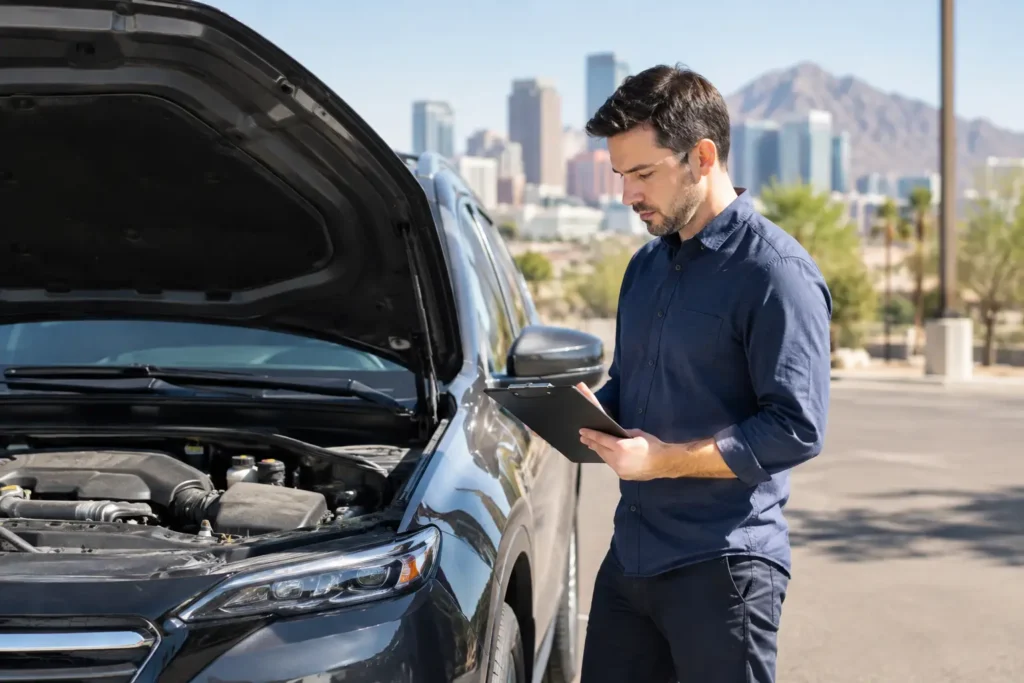

A rental car can be the difference between missing a week of income and getting back on the road quickly. But can renters use delivery apps? Often, yes – provided the rental company allows delivery work, the app accepts your vehicle setup, and you have the right insurance in place. Skipping any one of those checks can leave you with a denied account, unexpected fees, or a vehicle you cannot use for the work you planned.
For Phoenix-area drivers working with DoorDash, Instacart, Amazon Flex, Uber Eats, and similar platforms, the key is choosing a vehicle arrangement built for commercial driving rather than assuming every standard rental qualifies.
Can Renters Use Delivery Apps Legally and Practically?
Renters can use delivery apps when three separate requirements line up: the rental agreement permits commercial or gig-platform use, the delivery platform approves the vehicle and driver, and insurance covers the activity. These are different questions. A car may be perfectly legal to drive on Arizona roads but still be restricted by a rental contract. Likewise, a rental company may permit delivery driving while a specific app has documentation or vehicle requirements that delay approval.
Start with the rental agreement. Many traditional rental agreements limit commercial use, prohibit delivery work, or charge penalties if a renter uses the vehicle for a purpose not listed in the contract. Do not rely on a verbal assumption or an old policy you found online. Ask directly whether the vehicle can be used for the specific type of work you do, whether that includes food delivery, grocery delivery, package delivery, rideshare, or medical transportation, and whether any mileage or geographic restrictions apply.
A rental program designed for gig workers is generally a better fit than a personal-use rental. It may offer weekly terms, road-ready vehicles, insurance guidance, and mileage options that make sense for drivers putting in regular hours. That flexibility matters when demand changes from one week to the next.
Check the Delivery App Before You Reserve
Each platform sets its own onboarding rules, and those rules can change. Some delivery apps focus mainly on the driver, valid license, background screening, vehicle information, and insurance. Others may request registration details, inspections, or documentation showing that you are authorized to use the vehicle.
Before reserving a vehicle, check the app’s current driver requirements and make sure you can provide the documents it asks for. If the registration is in the rental company’s name, ask what paperwork is available for drivers who need to submit vehicle details. Never upload altered documents or list a vehicle you are not authorized to use. A fast approval is not worth risking deactivation later.
There can also be differences between platforms. A vehicle accepted for restaurant delivery may not be eligible for a passenger rideshare service. Amazon Flex, Veyo, and other specialty platforms can have their own vehicle standards, insurance expectations, and local market availability. If you plan to work across several apps, confirm compatibility with each one before you commit to a weekly rental.
Ask These Questions Up Front
A quick conversation before pickup can prevent a costly surprise. Ask whether commercial delivery use is permitted in writing, whether the vehicle is approved for the apps you plan to use, and what insurance protection applies while you are actively making deliveries. Also confirm the weekly price, deposit requirements, mileage terms, maintenance process, and what happens if the vehicle needs service.
The best option is not always the lowest advertised weekly rate. A lower rate with a tight mileage cap, no commercial-use permission, or unclear insurance can cost more than a transparent rental built around your work schedule.
Insurance Is the Detail You Cannot Guess About
Personal auto insurance and rental coverage do not automatically cover paid delivery activity. When you accept an order, drive to a pickup, carry an order, or head to a drop-off, the insurance rules can be different from personal driving. Delivery platforms may provide limited coverage during certain parts of a delivery, but the coverage limits, deductibles, and timing vary by company and state.
That is why drivers should understand where their protection begins and ends. Ask the rental provider whether insurance is included, optional, or required. Ask whether it applies to commercial delivery use, not just personal errands. If you carry your own insurance, speak with your insurer about whether your policy covers a rented vehicle used for delivery work. Do not assume an app’s coverage fills every gap.
You should also know who is responsible if there is an accident, a windshield crack, a flat tire, theft, or damage caused by another driver. Clear answers make it easier to decide whether a rental fits your risk tolerance and earning plan.
Do the Math Before Your First Shift
A rental can help you start earning without buying a vehicle or taking on a long-term loan. For many drivers, that immediate access is valuable, especially after a breakdown, a vehicle sale, or a change in work circumstances. Still, a delivery rental is a business expense, and it needs to work with your weekly numbers.
Add up the full operating cost: rental payment, fuel, insurance or protection options, app fees, parking, tolls where applicable, and your expected maintenance-related responsibilities. Then compare that number with realistic earnings in your delivery zone. Phoenix, Tempe, Scottsdale, Mesa, Glendale, and other Valley areas can have different order patterns depending on time of day, restaurant density, weather, and event traffic.
Do not build your plan around the busiest Saturday you have ever had. Use a conservative estimate based on the hours you can reliably work. A weekly rental is often most practical for drivers who can work consistently enough to cover the fixed vehicle cost while still keeping a worthwhile profit.
Mileage and Fuel Can Change the Equation
Delivery work adds miles quickly. Multiple short orders may look efficient on the app, yet create more driving than expected through pickup waits, apartment complexes, gated communities, and return trips to active areas. If your rental has a mileage allowance, track your daily distance from the first day. If unlimited mileage is available, confirm whether it applies to your intended commercial use and understand the fuel return policy.
Choose a vehicle that fits the work. Fuel efficiency can matter for food and grocery delivery, while cargo room may matter more for larger grocery orders or package routes. Reliability matters in every case. An inexpensive vehicle that is frequently unavailable for service does not help a driver meet delivery windows.
Keep Your Rental in Good Standing
Once you have a permitted vehicle and an approved driver account, treat the rental agreement like part of your business operation. Keep the car clean, report warning lights or mechanical concerns early, follow required maintenance instructions, and return it with the agreed fuel level. Do not let another person drive unless the contract specifically allows and lists them.
For delivery drivers, organization helps. Keep your license, proof of insurance, rental paperwork, and any platform-required documents accessible on your phone and in the vehicle as appropriate. Use an insulated bag for food orders, secure grocery loads so they do not spill, and inspect the car before and after each shift. These simple habits protect both your customer ratings and the vehicle deposit.
If your work plans change, contact the rental provider before making assumptions. You may begin with food delivery and later want to add rideshare or another platform. That switch can affect vehicle eligibility, insurance needs, and contract terms.
A Flexible Option for Phoenix Gig Drivers
Drivers do not always need a vehicle for months or years. Sometimes they need dependable transportation this week, with terms that support the way they earn. Elite Movement Transportation Services offers Phoenix-area vehicle rental options for personal drivers and qualifying gig workers, with a focus on flexible arrangements and dependable vehicles.
Availability, permitted use, insurance options, and pricing can vary by vehicle and reservation. The practical move is to explain how you plan to use the car before booking. A provider can then help match you with an option that supports your route, work schedule, and budget instead of putting you in a vehicle that creates problems after pickup.
Frequently Asked Questions
Can I use any rental car for DoorDash or Instacart?
No. A rental car must be authorized for commercial delivery use under its rental agreement. You also need to meet the delivery app’s current driver and vehicle requirements. Confirm both before reserving the car.
Does delivery app insurance cover a rental vehicle?
It depends on the platform, the stage of the delivery, and the specific coverage offered in your market. App-provided insurance may be limited and may not replace coverage required by the rental provider. Review the details before driving.
Is a weekly rental worth it for delivery work?
It can be, particularly when you need a vehicle quickly and can work enough hours to cover weekly costs. Calculate the rental, fuel, insurance, and expected mileage against conservative weekly earnings before committing.
The right rental should make it easier to accept orders and earn, not introduce new uncertainty. Get the commercial-use permission, app requirements, insurance details, and total cost clear before pickup, then you can spend your time focused on the road and the work ahead.